Physics is the branch of science concerned with the properties of matter and energy and the relationships between them through space and time. Man makes a deliberate effort to understand the working of things in nature and their relationship. Physics therefore achieves this by inculcating in students the ability to observe, measure, analyze and draw accurate deductions about an occurrence and extend the knowledge of nature. The Ph.D programme in Physics is intended to prepare candidates to work independently, arrive at new insights and contribute to research culminating in new knowledge which makes distinct contributions to understanding of the subject area. The candidate should be able to initiate research and generate new knowledge, supervise and teach postgraduate students, and take up leadership roles in the industry and institutions of higher learning. The course work shall be taken alongside research and thesis for complete knowledge and understanding, geared to develop, verify and disseminate the theory and applications of Physics based on originality and importance.
The department of physics offers the program leading to Doctor of Philosophy (Ph.D.) in physics. The program is offered by coursework, examination and thesis in the fields of Material Science, Condensed Matter Physics, Electronics, Renewable Energy and Theoretical Physics.
Philosophy of the Programme
The programme embraces constructivist philosophy which is in line with Moi University philosophy of pragmatism; putting knowledge to work. The PhD graduates
are expected to acquire practical oriented skills and generate new knowledge that will enable them to participate productively in the social, economic and technological transformation of society as spelled out in vision 2030. The philosophy of the programme entails training of physics experts in the areas of Theoretical Physics, Renewable Energy, Electronics and Materials Science.
Goal of the Programme
To train highly motivated and competent Physicist who makes transformative contribution to the world of technological knowledge and utilizes it to improve the lives. The PhD graduate shall provide expertise and leadership in the area of specialization, generate new knowledge and train other professionals or researchers.
Objectives of the programme
The objectives of the programme are to enable the learners to:
1) Acquire fundamental concepts and advanced techniques of Physics and scientific methodology
2) Design and conduct research projects in the areas of specialization.
3) Develop a sense of leadership, expertize and sustained commitment to the development of new ideas or processes at the forefront of area of specialization.
4) Synthesize scientific methods used in research and design innovative solutions to
societal needs.
Expected Learning Outcomes of the programme
Upon successful completion of this programme students will be able to:
1) Apply fundamental concepts and advanced techniques of Physics and scientific methodology to advance the knowledge and skills in theoretical physics, condensed matter physics, material science, renewable energy, and electronics
2) Formulate and execute research projects in theoretical physics, material science, condensed matter physics, renewable energy, and Electronics.
3) Provide scholarly leadership and expertise and sustained commitment to the development of new ideas or processes at the forefront of theoretical physics,
condensed matter physics, material science, renewable energy, and electronics.
4) Adapt the scientific methods used in research to provide solutions and innovations applicable to societal needs in the areas of theoretical physics, condensed matter physics, material science, renewable energy, and electronics
Course Schedules, Codes and Titles
First First year First Semester
Course Schedule Per Semester
Distribution of Courses per Semester
|
Code
|
Title
|
contact Hours per week
|
Theory contact Hours per Semester |
Practicle contact Hours per Semester |
Total Contact Hours per Semester |
|
PHY 901
|
Advanced Mathematical Physics
|
3
|
42 |
|
42 |
|
PHY 902
|
Advanced Research Methodology
|
3
|
28 |
14 |
42 |
|
PHY 903
|
Research Seminar
|
3
|
14 |
28 |
42 |
|
PHY 989
|
PhD Research Proposal
- Development:
Literature Review
|
6
|
|
84 |
84 |
| TOTAL |
15 |
84 |
126 |
210 |
Second Semester
(B) Condensed Matter Physics Option
|
Code
|
|
Title
|
Hours per week
|
Contact
Hours Per
Semester |
Contact
Hours Per
Semester |
Contact
Hours |
| |
|
TWO core courses and
TWO electives from
Area of specialization.
|
12
|
168 |
- |
168 |
|
(Supervisor may demand for more courses)
|
|
PHY 989
|
|
PhD Research Proposal
– Development, Setup
and write up
|
3
|
- |
42 |
42 |
| TOTAL |
15 |
168 |
42 |
210 |
|
Areas of Specialization for Year One Semester Two
i) Theoretical Physics Option
|
| PHY910 |
Many body theory
|
3 |
42 |
- |
42 |
| PHY911 |
Advanced statistical Mechanics
|
3 |
42 |
- |
42 |
| PHY912 |
Superconductors and Superfluids
|
3 |
42 |
- |
42 |
| PHY913 |
Advanced Quantum Mechanics
|
3 |
42 |
- |
42 |
| TOTAL |
12 |
168 |
|
168 |
|
ii) Condensed Matter Physics Option
|
| PHY915 |
Physics of Mesoscopic Systems
|
3 |
42 |
- |
42 |
| PHY916 |
Topological States of Matter
|
3 |
42 |
- |
42 |
| |
Any TWO Electives
|
6 |
42 |
- |
84 |
| TOTAL |
12 |
168 |
|
168 |
|
iii) Material Science Option
|
| PHY918 |
Principles of Functional Materials
|
3 |
42 |
- |
42 |
| PHY919 |
Structure of Materials
|
3 |
42 |
- |
42 |
| |
Any TWO Electives
|
6 |
84 |
- |
84 |
| TOTAL |
12 |
168 |
- |
168 |
|
iv) Renewable Energy Option
|
| PHY922 |
Materials for Energy Storage and Conversion
|
3 |
42 |
- |
42 |
| PHY923 |
Energy technologies, environment and sustainability
|
3 |
42 |
- |
42 |
| |
Any TWO Electives
|
6 |
84 |
- |
84 |
| TOTAL |
12 |
168 |
|
168 |
|
v) Electronics Option
|
| PHY924 |
Digital System Design
|
3 |
42 |
- |
42 |
| PHY925 |
Microfabrication
|
3 |
42 |
- |
42 |
| |
Any TWO Electives
|
6 |
84 |
- |
84 |
| TOTAL |
12
|
168 |
|
168 |
Second Year
|
Code
|
Title
|
Contact
Hours
per Week
|
Theory
Contact
Hours Per
Semester |
Practical
Contact
Hours Per
Semester |
Total
Contact
Hours |
|
PHY999
|
Proposal - Writing and Oral Presentation.
PhD Thesis - Data generation and
Analysis
|
15
|
|
210 |
210 |
|
TOTAL
|
15 |
|
210 |
210 |
Third Year
|
Code
|
Title
|
Contact
Hours
per Week
|
Theory
Contact
Hours Per
Semester |
Practical
Contact
Hours Per
Semester |
Total
Contact
Hours |
|
PHY999
|
PhD Thesis - Writing, Submission and Oral Presentation
|
15
|
|
210 |
210 |
|
TOTAL
|
15 |
|
210 |
210 |
Elective
Material science/Condensed Matter
Physics Options
|
Code
|
Title
|
Units
|
|
PHY917E
|
Crystallography and Crystal analysis
|
42
|
|
PHY920E
|
Advanced Nanomaterials
|
42
|
|
PHY930E
|
MEMS Sensors and Actuators |
42 |
|
Renewable energy Options
|
|
PHY921E
|
Inorganic nanomaterials for sustainability
|
42
|
|
PHY931E
|
Wind Energy
|
42
|
|
PHY928E
|
Fuel Cells and photovoltaic systems II
|
42
|
|
Electronics Options
|
|
PHY927E
|
Quantum Devices and Technology
|
42
|
|
PHY929E
|
Optical Fibre Technology
|
42
|
| PHY926E |
Nano-electronics Devices
|
42 |
Programme Matrix
Programme Matrix
KEY for Expected Learning Outcomes of the programme in the Programme Matrix
1) Apply fundamental concepts and advanced techniques of Physics and scientific methodology to advance the knowledge and skills in theoretical physics, condensed matter physics, material science, renewable energy, and electronics
2) Formulate and execute research projects in theoretical physics, material science, condensed matter physics, renewable energy, and Electronics.
3) Provide scholarly leadership and expertise and sustained commitment to the development of new ideas or processes at the forefront of theoretical physics, condensed matter physics, material science, renewable energy, and electronics.
4) Adapt the scientific methods used in research to provide solutions and innovations applicable to societal needs in the areas of theoretical physics, condensed matter physics, material science, renewable energy, and electronics
The programme expected learning outcomes matrix
| |
|
Programme Expected Learning Outcome |
Course
Code |
Course Title |
1 |
2 |
3 |
4 |
| PHY901 |
Advanced Mathematical Physics |
X |
|
|
X |
| PHY902 |
Advanced Research Methodology |
X |
X |
|
X |
| PHY903 |
Research Seminar |
X |
X |
X |
X |
| PHY910 |
Many body theory |
X |
X |
X |
|
| PHY911 |
Advanced statistical Mechanics |
X |
X |
X |
|
| PHY912 |
Superconductors and Superfluids |
X |
X |
X |
X |
| PHY913 |
Advanced Quantum Mechanics |
X |
X |
|
|
| PHY915 |
Physics of Mesoscopic Systems |
X |
X |
X |
X |
| PHY916 |
Topological States of Matter |
X |
X |
X |
X |
| PHY917E |
Crystallography and Crystal Analysis |
X |
X |
X |
|
| PHY918 |
Principles of Functional Materials |
X |
X |
X |
|
| PHY919 |
Structure of Materials |
X |
X |
X |
X |
| PHY920E |
Advanced Nanomaterials |
X |
X |
|
|
| PHY921E |
Inorganic nanomaterials for sustainability |
X |
X |
X |
|
| PHY922 |
Materials for Energy Storage and Conversion
|
X |
X |
X |
|
| PHY923 |
Energy technologies, environment and sustainability
|
X |
X |
X |
X |
| PHY924 |
Digital System Design |
X |
X |
X |
X |
| PHY925 |
Microfabrication |
X |
X |
X |
|
| PHY926E |
Nano-electronics Devices |
X |
X |
X |
|
| PHY927E |
Quantum Devices and Technology |
X |
X |
X |
|
| PHY928E |
Fuel Cells and photovoltaic systems II |
X |
X |
X |
X |
| PHY929E |
Optical Fibre Technology |
X |
X |
X |
|
| PHY930E |
MEMS Sensors and Actuators |
X |
X |
X |
|
| PHY931E |
Wind Energy |
X |
X |
X |
|
| PHY989 |
PhD Research Proposal |
X |
X |
X |
X |
| PHY999 |
PhD Thesis |
X |
X |
X |
X |
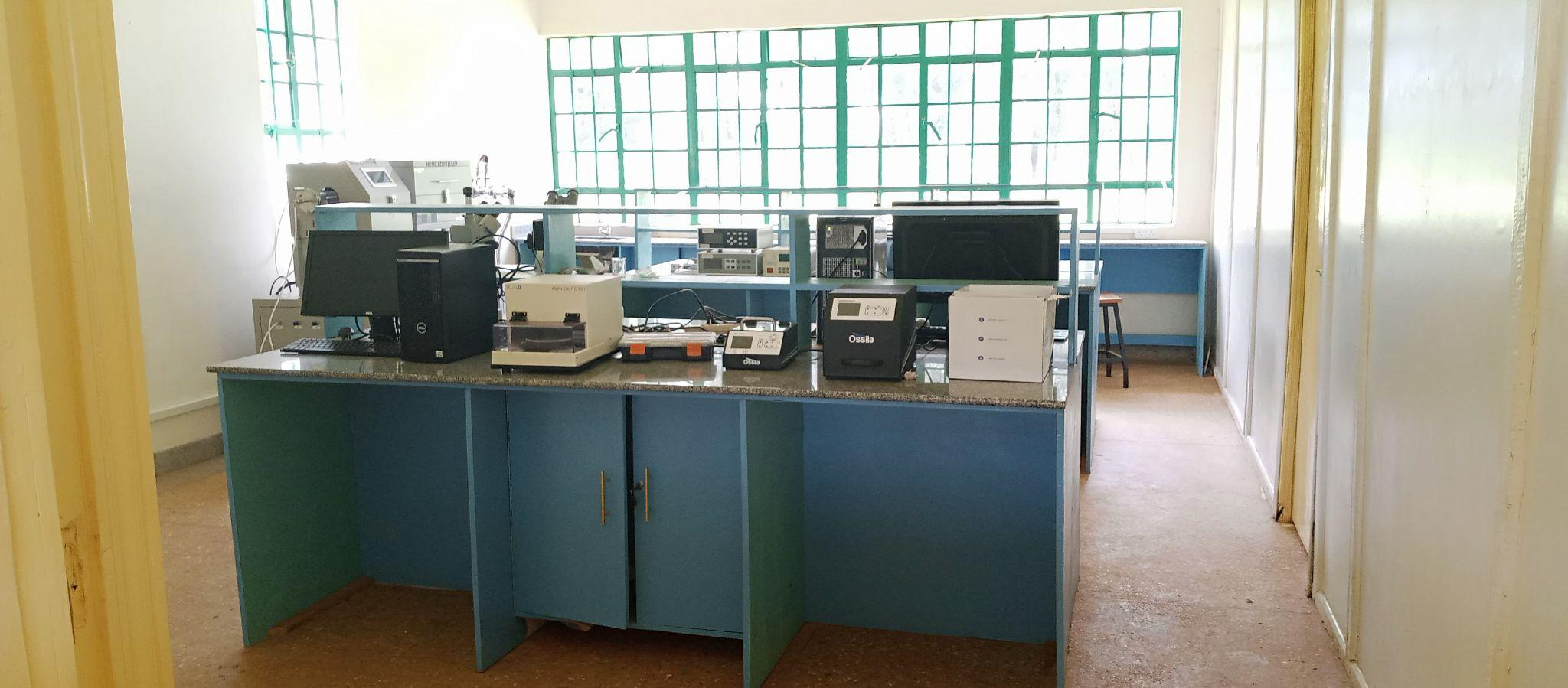
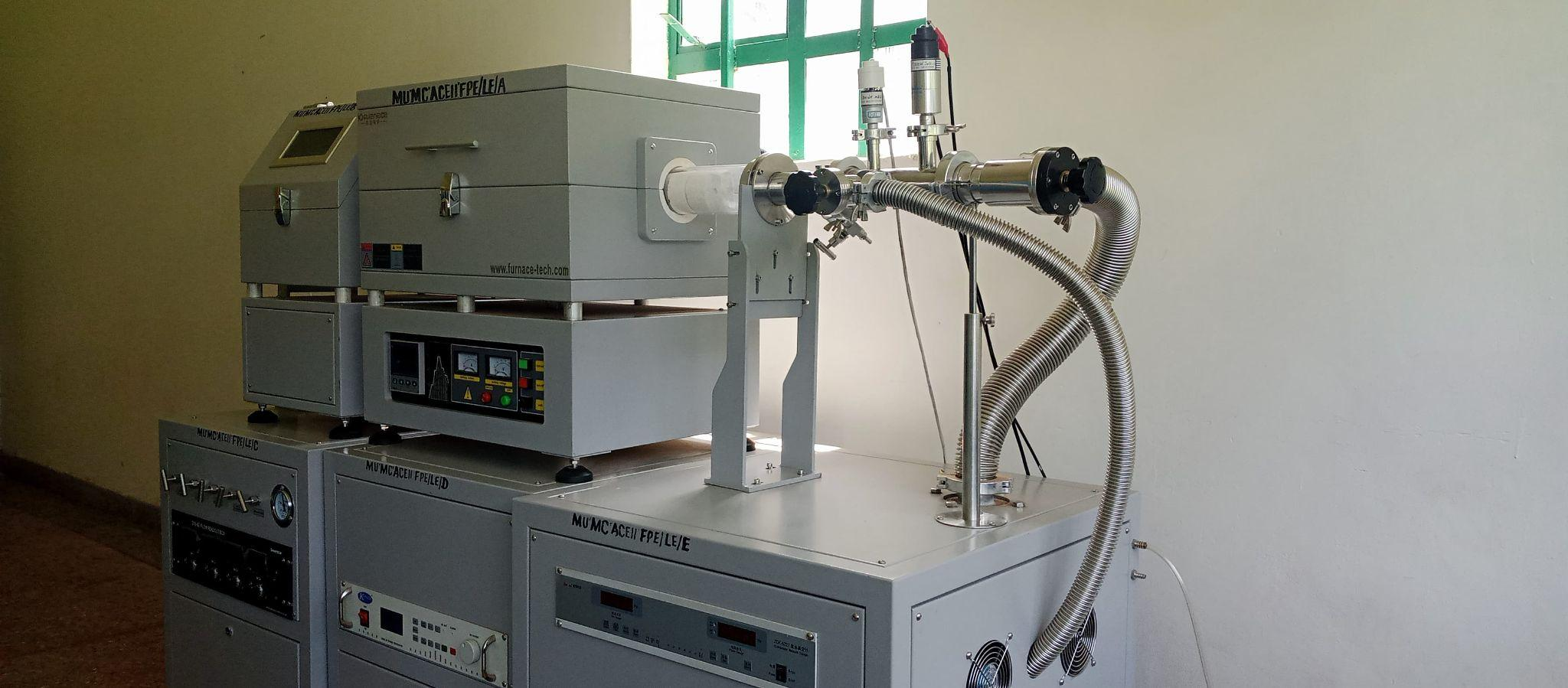
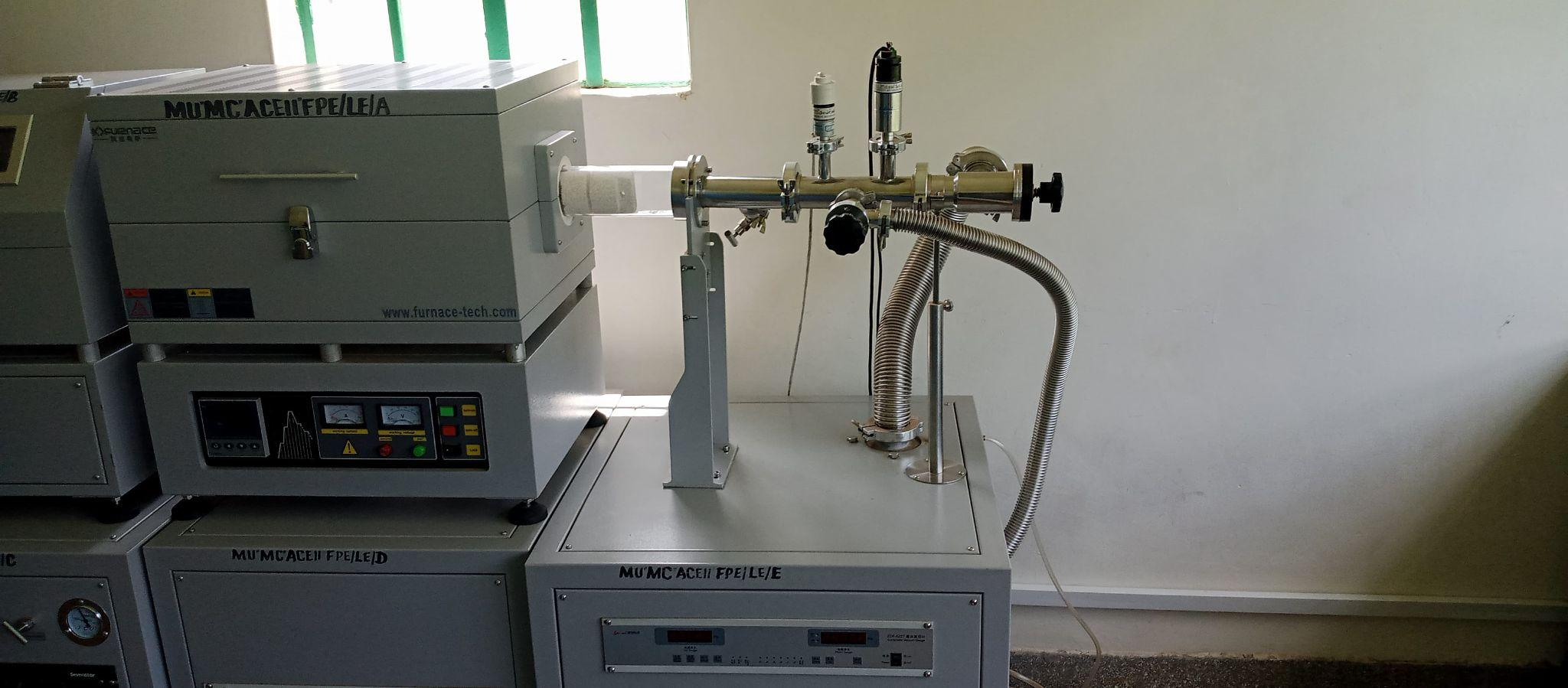
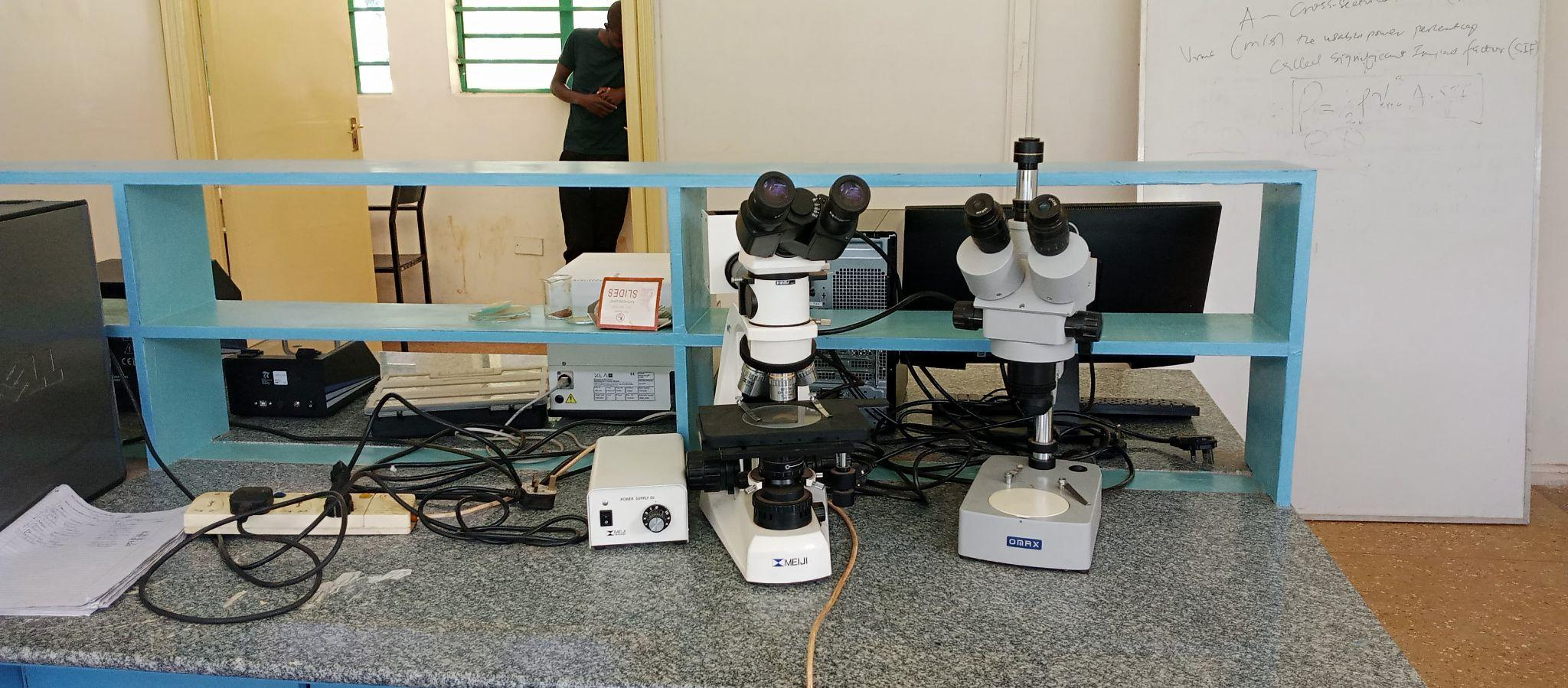
Physics Laboratory
MOI UNIVERSITY PHYSICS RESEARCH LAB
Progamme Statistics
PROGRAMME STATISTICS
| |
2024 |
2023 |
2022 |
2021 |
2020 |
2019 |
2018 |
| 1. No. of applicants |
10 |
8 |
9 |
7 |
3 |
8 |
6 |
| 2. No. of students enrolled (all nationalities) |
6 |
5 |
7 |
6 |
3 |
4 |
4 |
| 3. No. of students enrolled (internationals) |
2 |
0 |
1 |
1 |
0 |
0 |
1 |
| 4. No. of students enrolled (LeastDeveloped Countries (LDC, definition ac-cording to United Nations)) |
2 |
0 |
1 |
1 |
0 |
0 |
1 |
| 5. No. of female students enrolled (all nationalities) |
2 |
1 |
2 |
0 |
0 |
2 |
1 |
| 6. No. of students of this cohort who have graduated to date |
0 |
0 |
0 |
0 |
2 |
3 |
4 |
| 7. No. of students of this cohort who have dropped out to date |
0 |
0 |
0 |
1 |
0 |
1 |
0 |
| 8. No. of supervisors |
14 |
11 |
8 |
8 |
8 |
7 |
6 |
| 9. Supervisor ratio (please calculate from fields 1 and 8) |
1 |
1 |
1 |
1 |
1 |
1 |
1 |